Why Qualified People Keep Losing Government Job Competitions

One of Canada’s largest employers posts thousands of jobs every single day.
Most people never apply for government jobs.
Not because they can’t qualify. Because they have already talked themselves out of it — before they ever read a single posting.
The Real Reason You’re Not Getting Government Jobs
One of Canada’s largest employers posts thousands of jobs every single day.
Most people never apply.
Not because they can’t qualify. Because they have already talked themselves out of it — before they ever read a single posting.
I have spent 19 years inside the Ontario public sector. I have sat on hiring panels. I have watched how applications get screened, how candidates get eliminated, and how offers get made. And in over 15 years of helping professionals navigate this system, I keep seeing the same pattern: capable, experienced people who could absolutely get in — who never try.
This post is about why that happens. And what to do instead.
The Objections I Hear Every Time
In over 15 years of helping professionals navigate public-sector hiring, I have heard the same four objections on repeat:
- “Government jobs are given to friends and family.”
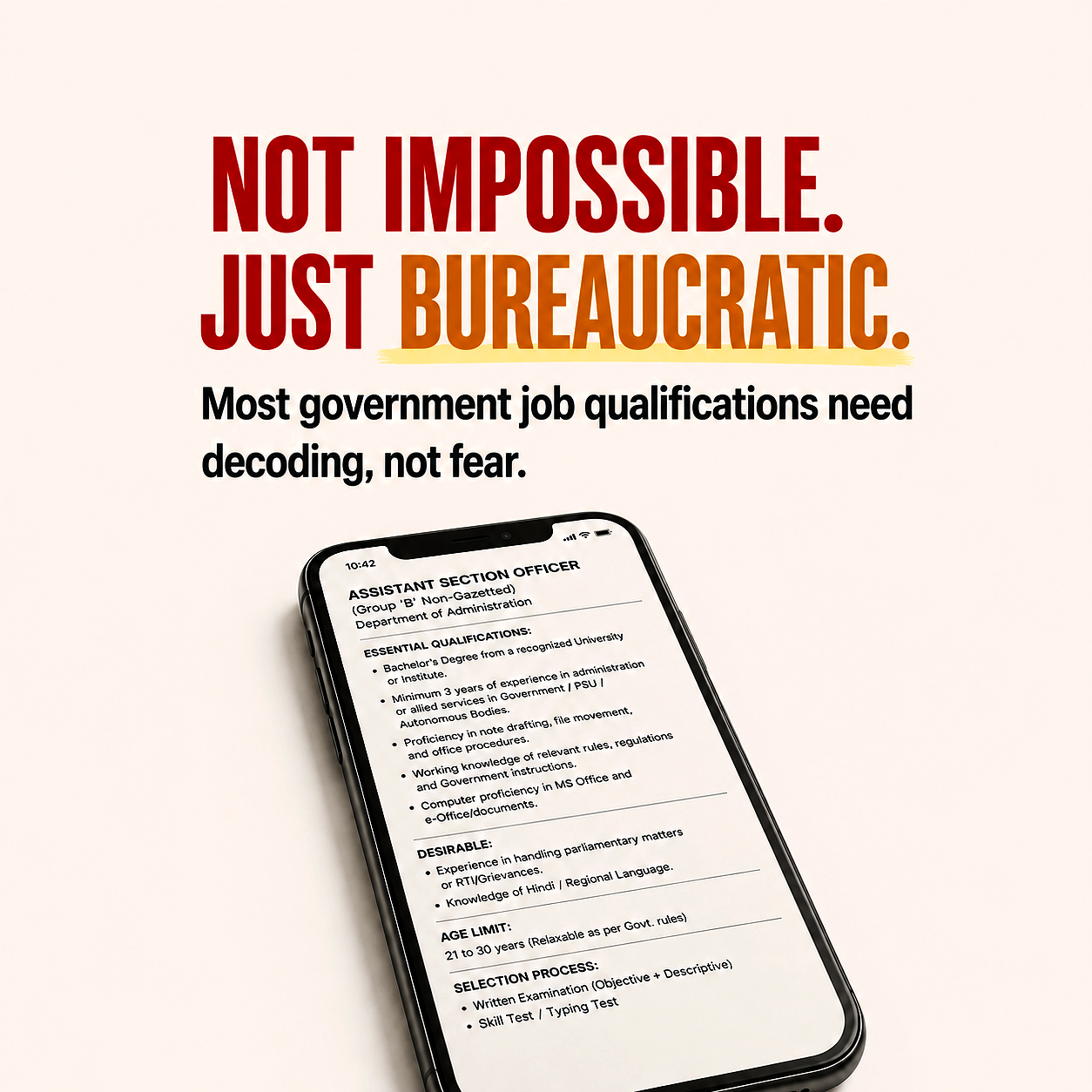
- “The process is too bureaucratic.”
- “The requirements are too high.”
- “I would never get in.”
Here is the problem with all four: most people make this decision before they understand how public-sector hiring actually works.
They are not making an informed assessment. They are repeating assumptions they heard from someone else, who heard it from someone else, who applied once ten years ago and got rejected without understanding why.
The objections feel logical. They are not based on evidence.
And here is what makes them particularly damaging: they are self-sealing. Once you believe the process is rigged or impossible, you stop reading postings carefully. You stop tailoring applications. You put in minimal effort and get minimal results — which then confirms the belief that it was never worth trying in the first place.
What Government Hiring Actually Is
Government hiring is not perfect. But it is structured.
And structure means something important: the rules are the same for everyone.
Every candidate who applies to the same posting is evaluated against the same criteria. Every interview panel uses the same scoring guide. Every screening question has a defined standard. There is no hidden list. There is no back room where managers pick their favourites.
Does nepotism exist in some corners of some organizations? Of course. It exists everywhere. But the public sector has more formal safeguards against it than most private-sector environments — precisely because public scrutiny and accountability demand it.
The structure also means this: if you understand how the process works, you have a real advantage over candidates who do not.
This is where most capable people fail — not because they lack experience, but because they do not demonstrate that experience clearly against the stated requirements.
They describe what they did. But they do not show how it matches the job.
They submit a generic resume. But the process is looking for evidence of specific competencies.
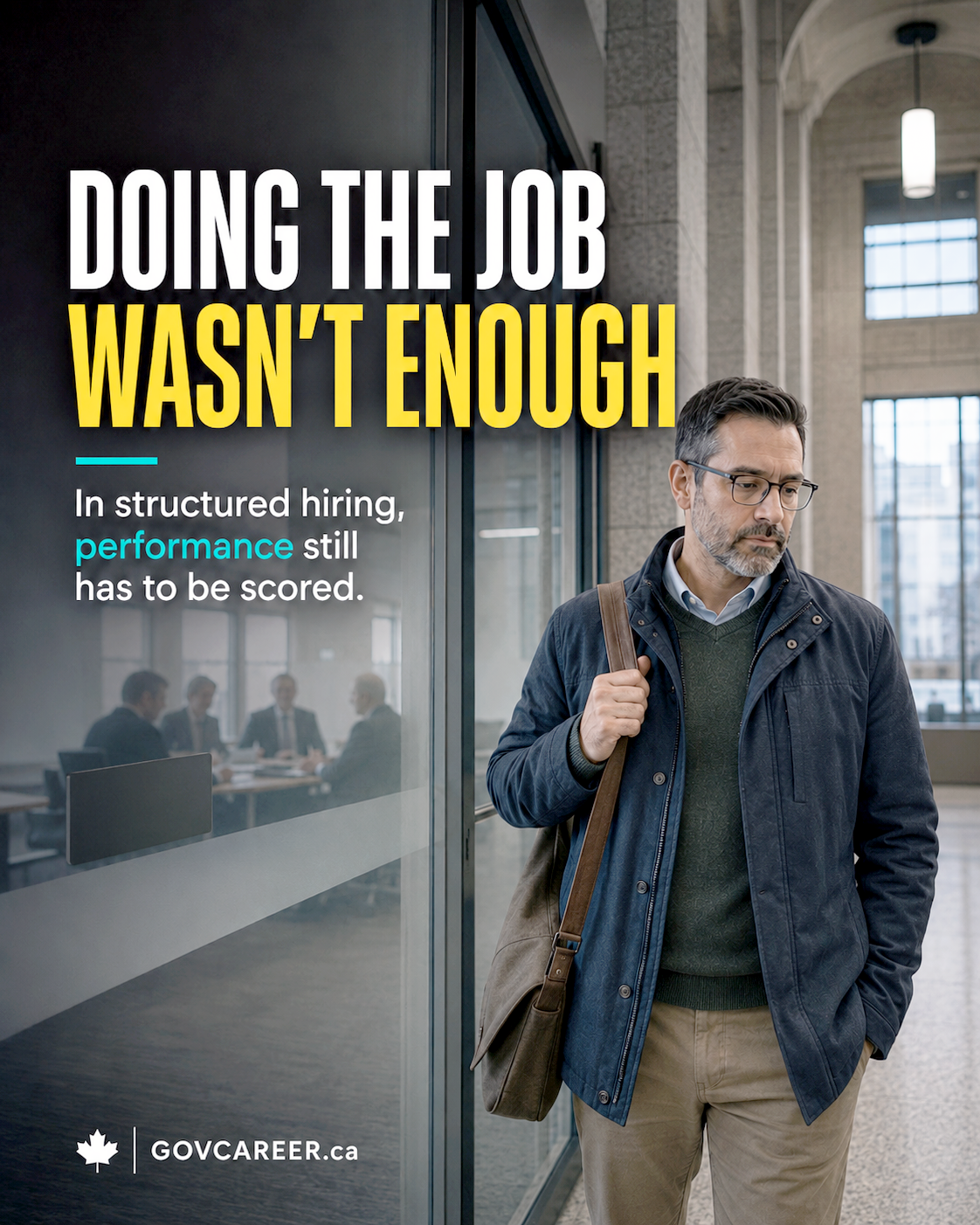
They answer interview questions casually. But the panel is scoring against defined criteria and a marking guide that was written before you walked into the room.
The process is not designed to trick you. It is designed to evaluate everyone fairly. But it only rewards candidates who engage with it on its own terms.
The Real Difference Between Public and Private Sector Hiring
In private-sector job search, many candidates rely on one strong resume and hope someone sees their potential. A recruiter might overlook a gap if you interview well. A referral might get your resume to the top of the pile. Personality, energy, and the right conversation can carry you further than your credentials alone.
Public-sector hiring does not work that way.
You cannot charm your way through a scoring grid. A great first impression does not add points to a structured interview score. A referral from a colleague does not change how your application is screened.
What matters is this: can you demonstrate, in writing and in a structured interview, that you meet the criteria stated in the posting?
That requires a completely different approach than most candidates are used to.
You must read the governmrnt jobs posting posting carefully — not skim it (be it even entry-level role). You must identify the essential qualifications and mandatory requirements. You must tailor your resume to show, point by point, how your experience maps to what is being evaluated. You must prepare for behavioural interview questions using structured response formats — because that is how panels score answers.
Is it more work? Yes.
Is it slower? Often.
But it is not impossible. And it is not only for people with connections — in fact, the entire structure exists precisely to ensure that connections do not determine outcomes.
The Barrier Is Not Qualification. It Is Misunderstanding.
The biggest obstacle for most candidates is not that they are unqualified.
It is that they misread the system before they even try — and that misreading costs them.
I have reviewed hundreds of applications over the years. The most common failure is not a lack of experience. It is a failure to communicate experience in a way the process can evaluate.
A candidate with ten years of relevant work writes a resume that describes their job duties. The posting asks for demonstrated experience managing competing priorities in a deadline-driven environment. The candidate has done exactly that, every day, for a decade. But their resume never says so. The screener cannot credit what is not written down.
The same pattern plays out in interviews. A candidate answers a behavioural question with a general statement — “I am very good with conflict resolution” — when the panel needs a specific example with a clear result. The answer earns partial marks or nothing. The candidate walks away thinking the process is unfair. The process was not unfair. It required something specific — and the candidate did not know that going in.
This is fixable. That is the part most people do not realize.
Once you understand how screening works, you can write to it. Once you understand how interviews are scored, you can prepare for it. The system is not a mystery. It is a structure — and structures can be learned.
The Value Does Not Stop at Getting In
One more thing most people overlook: public-sector hiring is a repeatable system.
The same principles that help you get hired also help you move up.
Internal competitions, promotions, reclassifications — all of them follow the same structured logic. The candidate who understands how to demonstrate their value against defined criteria does not just get the first job. They build a career, one competition at a time.
This is a meaningful advantage over colleagues who got in without fully understanding the process and have never learned to navigate it strategically.
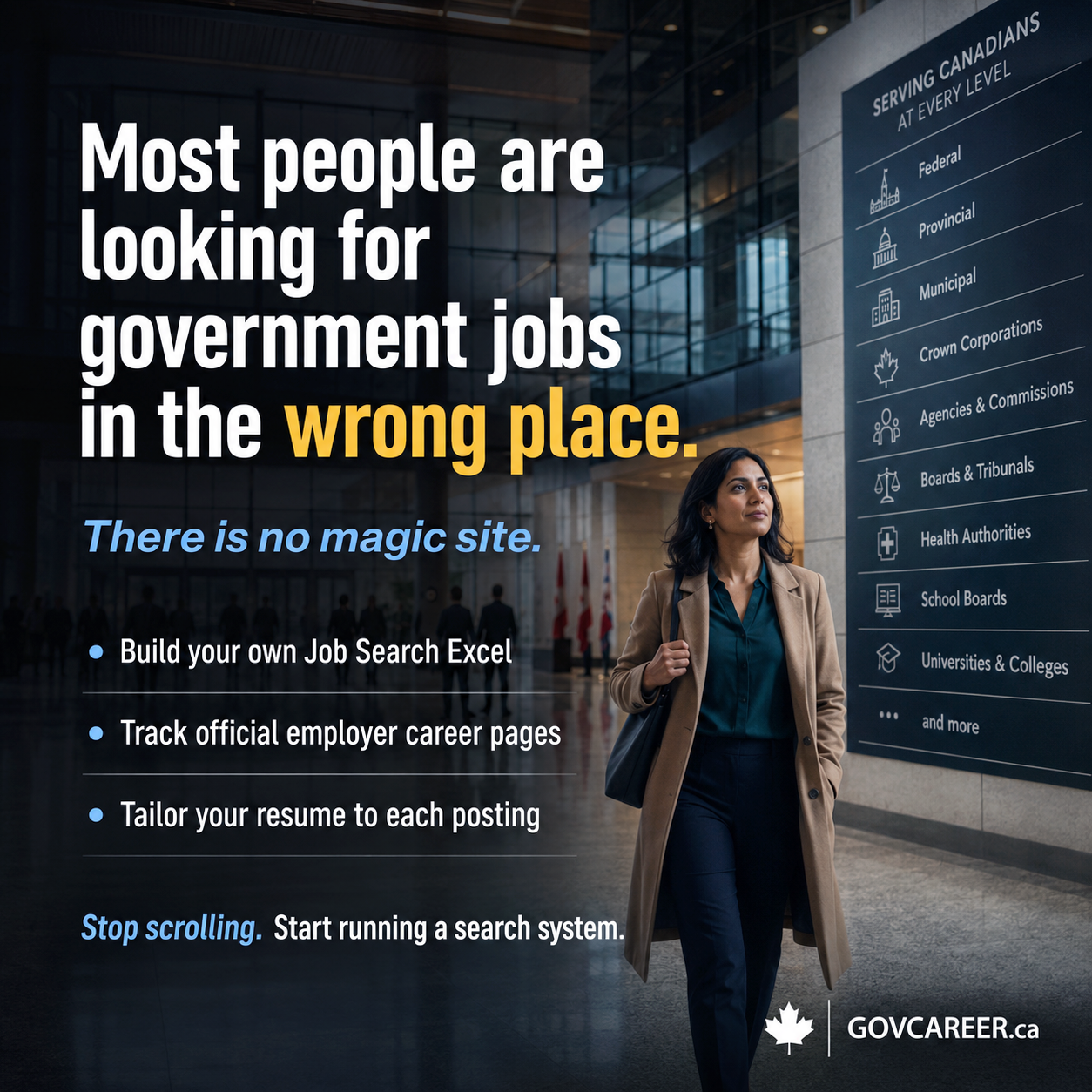
And this logic extends beyond government. Many large public institutions — hospitals, universities, school boards, regulatory agencies — use structured, criteria-based hiring. Once you understand the system, you can apply it across a much wider range of employers than most candidates realize.
The Shift That Changes Everything
If you are serious about public-sector work, stop asking: “Can I get in?”
Start asking:
- “What does this posting actually require?”
- “Where does my experience match the stated criteria?”
- “How do I demonstrate it clearly — in writing and in a structured interview?”
That shift changes everything. Not because the process becomes easier, but because you stop working against it and start working with it.
Most candidates who fail government competitions are not unqualified. They are underprepared — for a process they did not take the time to understand.
The good news: understanding the process is entirely within your control.
That is the foundation of everything I help people build.g I help people build.