Canada Day Is a Good Time to Think Seriously About Public Service Careers

Canada Day is not only about flags, fireworks, and a day off. It is also a useful moment to think about the institutions, services, and people that keep the country functioning.
For many people, government jobs and public sector jobs are not just career options. They are a way to build stable work, contribute to public life, and use professional experience in a system where qualifications, screening criteria, job posting requirements, and structured interviews matter. In Canada, public-sector hiring is usually built around structured hiring and merit-based hiring. That means strong applicants need more than experience. They need to show their experience clearly, directly, and in the language of the competition.
Canada Day creates a natural pause. People think about the country, their future, their families, their work, and the kind of life they want to build here. For some, that means looking again at public service careers, municipal jobs, provincial government jobs, federal government jobs, healthcare, education, Crown corporations, agencies, and other large public-sector organizations across Canada, Ontario, Toronto, the GTA, Ottawa, and beyond.
If you are thinking about a more stable career path, a transition into government, or a serious public-sector application, it helps to understand how government job search works in Canada before sending another generic resume.
Why Canada Day Connects Naturally to Public Service Careers
Canada Day reminds people that the country is more than geography. It is also systems. Roads, transit, parks, libraries, public health, planning, inspections, emergency services, social programs, education, courts, licensing, infrastructure, environmental regulation, finance, administration, procurement, policy, communications, data, IT, and public-facing services all require people.
Those people are not abstract “government workers.” They are engineers, analysts, clerks, program coordinators, planners, inspectors, administrators, managers, accountants, policy advisors, customer service representatives, technologists, project managers, HR professionals, communications specialists, and many others.
This is why public service careers can be attractive to people with very different backgrounds. A person from the private sector may have transferable project management experience. A newcomer may bring international professional experience that needs clearer positioning. A current public-sector employee may be trying to move internally. A person in Toronto may be looking at municipal jobs. Someone in Ottawa may be considering federal government jobs. Someone elsewhere in Ontario may be watching provincial government jobs or broader public sector jobs.
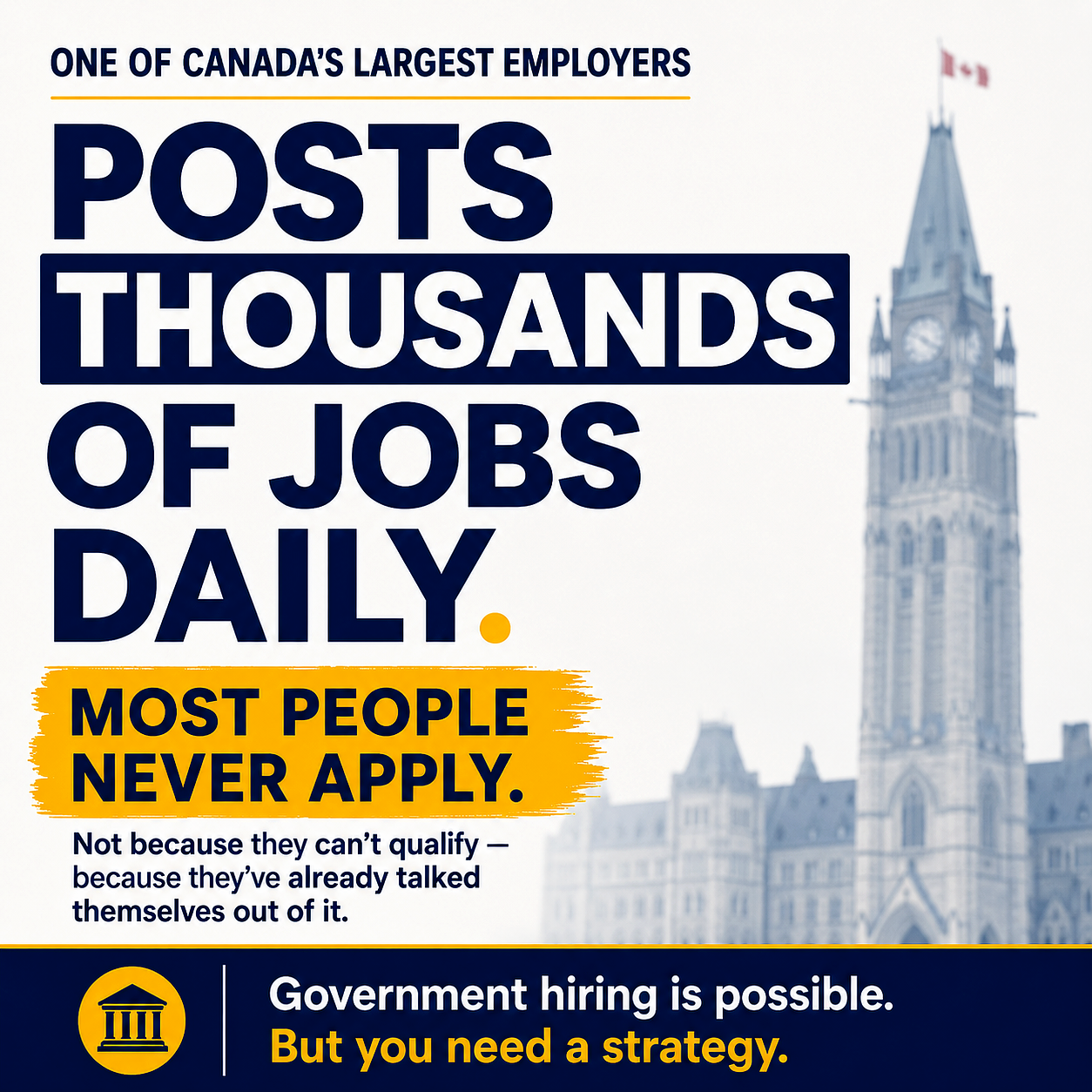
The opportunity is real. But the process is structured. That is where many qualified applicants lose.
Public Service Is Not One Career Path
A common mistake is treating “government jobs” as one simple category. It is not one category. It is a large employment ecosystem.
There are federal government jobs, provincial government jobs, municipal jobs, school boards, hospitals, universities, colleges, regulatory bodies, public agencies, Crown corporations, commissions, boards, and publicly funded organizations. Each organization may have its own recruitment system, job titles, screening approach, classification structure, interview format, and internal process.
For example, someone looking at Government of Canada job opportunities may face a different application structure than someone applying through the Ontario Public Service jobs site. A municipal candidate applying to City of Toronto jobs may see different role descriptions and hiring language than someone applying through City of Ottawa jobs.
The core principle, however, is similar across much of the public sector: the employer has to assess applicants against stated requirements. That may include education, experience, technical knowledge, competencies, communication skills, leadership, legislation, policy understanding, customer service, analytical ability, or role-specific criteria.
A strong public-sector application must make that match easy to see.
Canada Day Is Also a Reminder of Career Stability
Many people become interested in government jobs because they want stability. That is not a shallow reason. Stability affects housing decisions, family planning, mental health, retirement planning, debt management, professional confidence, and long-term life structure.
Public-sector work does not solve every career problem. It can be bureaucratic. Hiring can be slow. Competition can be intense. Advancement can require patience. Some roles are stressful. Some organizations are under-resourced. Some competitions are frustrating.
Still, government and broader public-sector employment can offer a combination of structure, benefits, pension potential, internal mobility, predictable processes, professional development, unionized environments in some roles, and long-term career paths that many private-sector workers do not have.
That is why public service careers remain attractive in Canada, especially during uncertain economic periods. But wanting stability is not enough. Applicants must compete properly.
The Biggest Misunderstanding About Government Job Applications
Many applicants assume government job applications work like private-sector applications.
They send a general resume. They describe their experience broadly. They hope the employer will understand the connection. They assume their title, employer, years of experience, and general competence will speak for themselves.
That approach often fails in public-sector hiring.
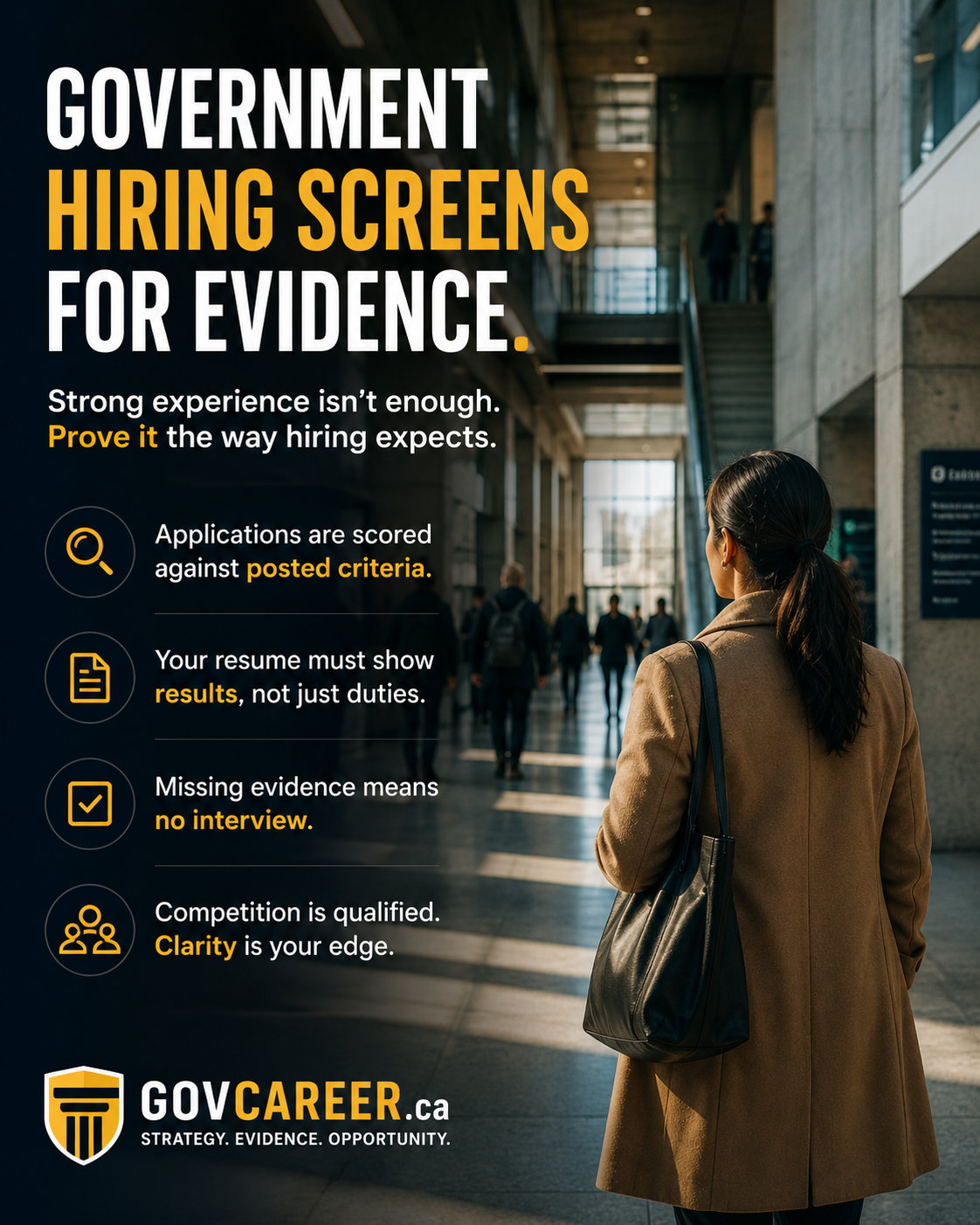
In structured hiring, the application is usually reviewed against stated job posting requirements and screening criteria. The reviewer may be looking for evidence that the applicant meets specific education, experience, knowledge, and skill requirements. If the evidence is unclear, buried, generic, or missing, the applicant may not move forward.
This is one reason resume tailoring matters so much. Resume writing for government job applications is not only about making a document look polished. It is about aligning evidence with the competition.
The question is not simply: “Am I qualified?”
The better question is: “Can the reviewer clearly see, from my application, that I meet the stated requirements?”
Those are not the same question.
Being Qualified and Being Screened In Are Different Things
This is one of the hardest lessons for applicants.
A person may be capable of doing the job and still fail to get screened in. That does not always mean the process is unfair. It may mean the application did not present the right evidence in the right way.
Public-sector hiring often depends on documentation. The resume, cover letter, application questions, screening answers, and interview answers all create the record. Panels and recruiters cannot always assume what is not clearly stated. They may not be able to infer that one job title included certain responsibilities. They may not give credit for experience that was implied but not explained.
That is why government job applications need more precision than many applicants expect.
If the posting asks for experience preparing reports, managing stakeholders, interpreting legislation, coordinating projects, analyzing data, supporting policy development, delivering customer service, supervising staff, or working with financial information, the application should not merely say “strong communication skills” or “responsible for operations.”
It should show where, how, and in what context the applicant performed relevant work.
Canada Needs People Who Can Work Inside Systems

Public service work is often about systems. That includes legal systems, administrative systems, financial systems, infrastructure systems, public accountability systems, service-delivery systems, and political governance structures.
This is why public-sector hiring often values more than technical ability. It may also assess judgment, documentation, fairness, consistency, communication, respect for process, confidentiality, stakeholder management, and ability to work within rules.
A private-sector applicant may have excellent experience but present it in a way that sounds too sales-driven, too general, or too disconnected from public accountability. A newcomer may have strong international experience but not translate it into Canadian public-sector language. A current public-sector employee may assume the panel already knows their work and fail to give complete answers.
Different applicant groups have different problems. But the common issue is presentation.
The Public Sector Does Not Hire Only One Type of Person
Another misunderstanding is that government jobs are only for people who already worked in government.
Internal candidates often have an advantage because they understand the environment, terminology, and process. But that does not mean outside applicants have no chance.
Many public-sector organizations need people with private-sector, nonprofit, technical, operational, financial, communications, IT, trades, engineering, administrative, healthcare, education, and management backgrounds. The issue is whether the applicant can show relevance.
A private-sector project coordinator may have public-sector transferable skills. A bank employee may have strong compliance, customer service, and documentation experience. A construction professional may understand contracts, safety, scheduling, field coordination, and stakeholder management. A newcomer may have leadership or technical experience that is highly relevant, but not obvious in a Canadian resume format. A call-centre supervisor may have experience with service standards, escalation, performance tracking, and team leadership.
The public sector is not closed to them. But their applications need translation.
Where Applicants Usually Lose Points
Many applicants lose not because they are weak, but because their application does not do enough work.
Common problems include:
• using the same resume for every posting
• relying on job titles instead of evidence
• hiding relevant experience under vague bullets
• failing to address mandatory qualifications
• treating the cover letter as a personality statement
• ignoring application questions
• using private-sector language without connecting it to public-sector needs
• applying to roles that are too far from their evidence base
• assuming years of experience automatically prove competence
• preparing for interviews only after being invited
• giving interview answers that are honest but unstructured
These problems are fixable. But they require a different approach from ordinary job searching.
Government Job Search Requires Better Role Targeting
Canada Day can make people think broadly about public service, but the actual job search must be specific.
Applying everywhere is usually inefficient. A stronger approach is to identify roles where your background has a realistic connection to the posting requirements. That may mean targeting a specific job family, level, employer type, geography, or function.
For example, a candidate in the GTA may look at Toronto municipal jobs, Ontario public sector jobs, hospital administration roles, school board roles, or agencies. A candidate in Ottawa may look at federal government jobs, municipal roles, national associations, regulatory bodies, and public agencies. A candidate elsewhere in Canada may look at provincial government job boards, Crown corporations, universities, colleges, healthcare employers, and local municipal jobs.
When applicants search official job boards, they should read postings carefully. The Government of Canada application process has its own structure, while provincial and municipal employers may use different platforms and screening methods. Someone looking outside Ontario might also review official provincial boards such as BC Public Service job postings, Government of Alberta jobs, or Government of Manitoba jobs depending on their location and career goals.
The point is not to collect links. The point is to target intelligently.
Resume Tailoring Is Not Keyword Stuffing
Many applicants hear “tailor your resume” and think it means adding keywords from the posting.
Keywords matter, but keyword stuffing is not strategy.
A strong government resume should show a real connection between the candidate’s experience and the job posting requirements. The wording should be clear, but the evidence must be real. If a posting requires experience coordinating projects, the resume should not just insert “project coordination” into a summary. It should show actual project coordination work: scope, stakeholders, timelines, deliverables, reporting, issues, systems, and outcomes where appropriate.
Resume tailoring should answer three questions:
• What does the posting actually require?
• What evidence does the candidate have?
• How can that evidence be presented clearly enough for screening?
This is especially important for applicants moving from private sector to government, newcomers applying in Canada, and people trying to move into public service careers after working in another field.
Cover Letters Still Matter in Many Public-Sector Competitions
Some applicants treat cover letters as old-fashioned. In many private-sector situations, that may be understandable. But in public-sector hiring, a cover letter can still matter when the employer requests it or when it helps explain how the applicant meets the role.
A weak cover letter says the person is passionate, hard-working, interested in the organization, and excited about the opportunity.
A stronger cover letter connects the applicant’s background to the job posting requirements. It explains fit, evidence, motivation, and relevant experience without becoming generic or emotional.
For government job applications, the cover letter should not repeat the resume word for word. It should help the reader understand the applicant’s alignment with the role.
That is especially important when the candidate’s experience is transferable rather than obvious.
Structured Interviews Are Different From Casual Interviews
Many public-sector interviews are structured interviews. That means candidates may be asked the same or similar questions, assessed against the same criteria, and scored according to expected evidence.
This can feel rigid, but it exists for a reason. Structured hiring and merit-based hiring require consistency and defensibility.
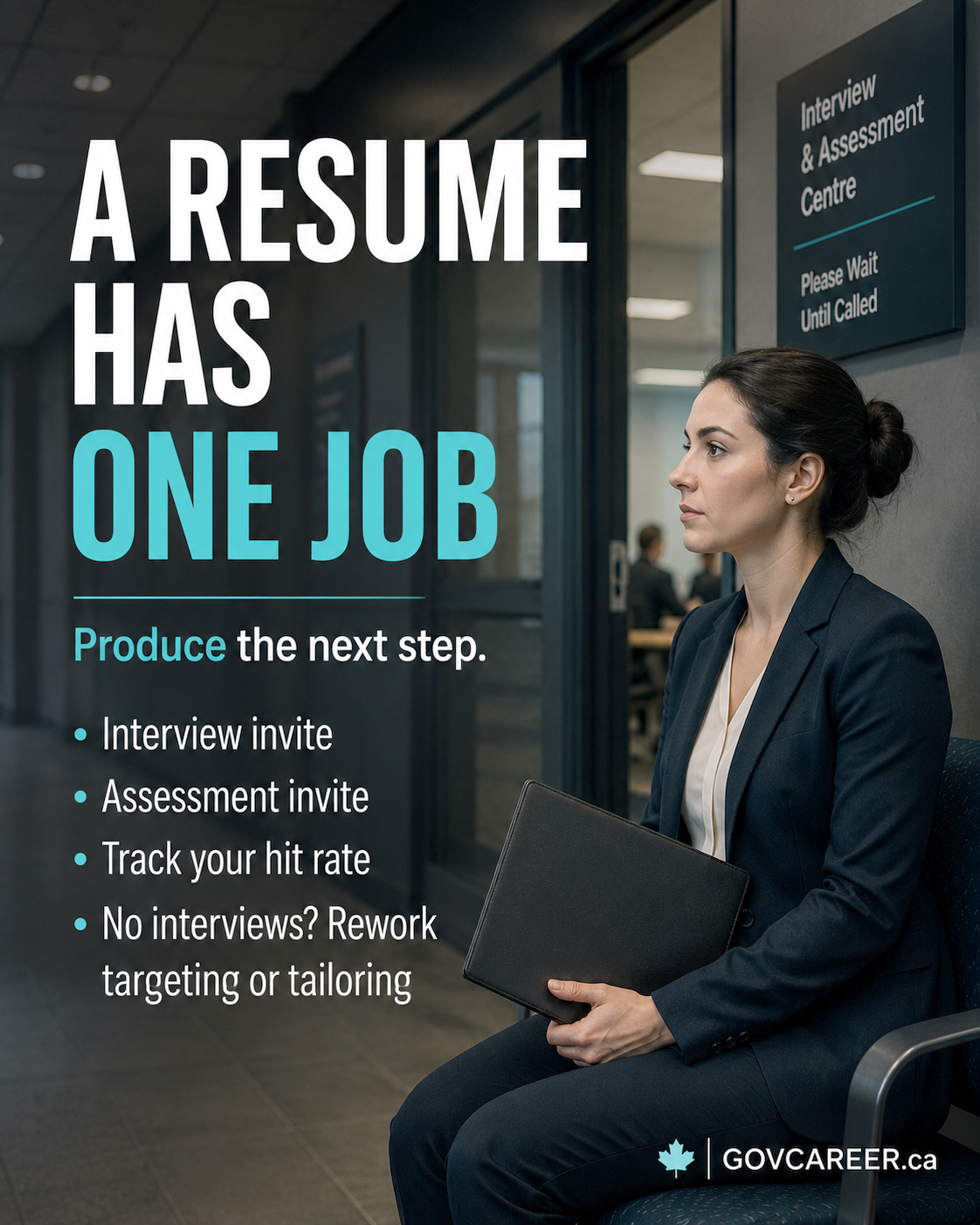
For candidates, this means interview preparation should not be casual. It is not enough to “just be yourself” or “talk through your experience.” A candidate needs to understand the role, anticipate competencies, prepare examples, and answer in a way that gives the panel enough evidence to score.
Structured interviews often reward candidates who are clear, complete, organized, and specific. They may punish candidates who are capable but vague.
A strong answer usually needs context, action, reasoning, result, and connection to the role. The exact format can vary, but the principle is simple: the panel needs evidence, not just confidence.
Internal Candidates Can Also Lose
Canada Day discussions about public service often focus on entering government from the outside. But internal advancement is also a major issue.
Current public-sector employees sometimes assume they should win competitions because they already know the work, have relationships, or have been acting in the role. Sometimes they are right about their capability. But structured competitions do not always reward assumed knowledge.
Internal candidates can lose when they:
• assume the panel already knows their work
• give short answers because the context feels obvious
• fail to explain routine work in scored language
• underestimate outside candidates
• rely on reputation instead of evidence
• treat the interview as a conversation instead of an assessment
An outside candidate may know less about the organization but answer every question more completely. That can matter on paper.
Internal applicants need to compete seriously. Being known is not the same as being scored highly.
Newcomers and Public-Sector Careers in Canada
For newcomers, public-sector careers can be appealing because they may offer stability, structure, benefits, and a long-term path into Canadian professional life. But newcomer applicants often face a translation problem.
Their experience may be strong, but Canadian employers may not immediately understand foreign job titles, institutions, industries, credentials, or scope of responsibility. The resume has to make the connection clearer.
This does not mean reducing the value of international experience. It means explaining it in a way that fits Canadian screening criteria.
A newcomer applying for public sector jobs in Canada may need to show:
• comparable responsibilities
• scope of work
• technical or professional skills
• leadership or coordination experience
• regulatory, administrative, or service-delivery context
• communication skills
• Canadian-relevant transferable experience
Public-sector hiring can be competitive, but it can also reward applicants who present their qualifications clearly and consistently.
Canada Day and the Meaning of Public Work
There is another reason Canada Day fits this topic. Public service careers are not only about personal security. They are also about contributing to systems that affect people’s daily lives.
A municipal employee may support permits, roads, recreation programs, by-law services, water systems, transit, housing, planning, or public works. A provincial employee may support healthcare, education, infrastructure, inspections, social services, environment, finance, or justice. A federal employee may support immigration, taxation, public safety, procurement, employment programs, national policy, or service delivery.
These roles matter because ordinary life depends on functional institutions.
That does not mean every government workplace is perfect. It does not mean every public-sector employee feels inspired every day. Real work is still real work. There are deadlines, politics, bureaucracy, frustration, and pressure.
But for many people, public-sector work offers something meaningful: the chance to build a career inside systems that serve the public.
The Application Is the First Professional Test
A government job application is not only paperwork. It is often the first test of whether the applicant understands the process.
A strong application shows judgment. It shows that the candidate can read requirements, respond clearly, provide evidence, and respect the structure of the competition.
A weak application may suggest the opposite, even if the person is capable.
This is why public-sector resume writing should be treated as application development, not document decoration. Fonts, formatting, and design are secondary. Alignment is primary.
The application must make the screening decision easier.
How to Think About Job Posting Requirements
Every serious government job application should start with the posting.
The posting tells you what the employer says it needs. It may include mandatory qualifications, asset qualifications, duties, competencies, education requirements, experience requirements, working conditions, technical skills, legislation, systems, certifications, and behavioural expectations.
Applicants often read postings too quickly. They focus on the title and salary. Then they send a resume that does not properly answer the posting.
A better approach is to break the posting into evidence categories:
• mandatory education or certification
• required experience
• preferred or asset experience
• technical skills
• soft skills and competencies
• public-sector context
• stakeholder or customer-service requirements
• leadership or coordination requirements
• reporting, documentation, or analytical requirements
• interview preparation clues
Once those categories are clear, the applicant can decide whether the role is realistic and how to position the application.
Public-Sector Hiring Is Competitive Because the Value Is High
There is a reason many people want government jobs. The value can be significant.
A stable public-sector role can change someone’s financial and professional path. It can create pensionable service, benefits, internal opportunities, salary progression, union protections in some roles, and long-term career identity. It can also help people build confidence after unstable work, layoffs, newcomer struggles, career interruption, or private-sector burnout.
Because the value is high, the competition can be serious.
That means applicants need to stop treating public-sector applications as casual submissions. A serious opportunity deserves a serious application.
This applies whether the person is applying to the federal government, the Ontario Public Service, a municipality, a hospital, a school board, a college, a university, or a public agency.
Geography Matters, But Strategy Matters More
Ontario, Toronto, the GTA, and Ottawa all have different public-sector employment patterns.
Toronto and the GTA offer municipal roles, provincial roles, agencies, boards, commissions, hospitals, education employers, transit organizations, and large public institutions. Ottawa has federal government jobs, municipal jobs, national organizations, regulatory bodies, associations, Crown corporations, and public-sector-adjacent roles.
Across Canada, applicants may look at municipal employers such as City of Vancouver jobs, City of Edmonton jobs, City of Calgary careers, City of Montreal jobs, or City of Winnipeg job postings, depending on where they live or want to move.
But geography alone is not strategy.
A candidate needs to know which roles fit their background, which postings are realistic, and which applications deserve time. Applying to 50 weak-fit roles is usually less effective than building strong applications for better-fit competitions.
The Public Sector Rewards Evidence
A public-sector application should not rely on personality claims.
Statements such as “I am a hard worker,” “I am passionate,” “I am a fast learner,” or “I have strong communication skills” may be true, but they usually do not carry much screening weight unless supported by evidence.
Evidence is stronger.
For example:
• What did you do?
• Where did you do it?
• Who did you support?
• What systems, policies, tools, or processes did you use?
• What problems did you solve?
• What level of responsibility did you have?
• What was the result?
• How does it connect to the posting?
This evidence-based approach is also useful for structured interviews. The same work used to build a strong application can later support interview preparation.
Why Generic Resumes Fail
A generic resume tries to be everything to everyone. Government applications usually need the opposite.
The resume should be focused enough that the reviewer can quickly see why the applicant fits the posting. That does not mean deleting valuable experience. It means arranging, wording, and emphasizing experience based on the role.
A candidate applying for a project coordinator role should not present the same resume used for a customer service supervisor role, even if both roles are possible. The evidence may overlap, but the emphasis should change.
This is the practical side of resume tailoring.
Public-sector hiring is often too structured for vague general resumes. The applicant must help the reviewer connect the dots.
Canada Day Is a Good Moment to Reset the Job Search
If you are thinking about public service careers today, use Canada Day as a reset point.
Do not simply decide that you want a government job. Decide to approach the process more seriously.
That may mean choosing better roles, reading postings more carefully, rebuilding your resume foundation, preparing stronger cover letters, learning how screening criteria work, and treating structured interviews as scored assessments rather than casual conversations.
It may also mean being more honest about fit. Not every role is realistic. Not every posting deserves an application. Not every background will match every competition. A good public-sector job search requires discipline.
A Better Way to Approach Your Next Public-Sector Application
Before applying to your next government or public-sector posting, slow down and check the match.
Ask yourself:
• Do I meet the mandatory requirements?
• Can I prove the required experience clearly?
• Is the role aligned with my actual background?
• Does my resume address the posting directly?
• Does my cover letter explain the fit?
• Are my strongest examples easy to find?
• Am I using public-sector language without exaggerating?
• If I get an interview, do I already know which examples I would use?
These questions are practical. They prevent wasted effort.
A serious application should not feel like a quick upload. It should feel like a structured response to a specific opportunity.
Public Service Careers Require Patience and Precision
Government hiring can take time. Competitions may move slowly. Screening can take weeks or months. Interviews may be delayed. Pools may be created. Candidates may not receive much feedback. Internal approvals may affect timelines.
The Government of Canada explanation of what to expect when applying gives one example of how structured and staged public-sector hiring can be.
This is why applicants need patience. But patience without precision is not enough.
A candidate who sends weak applications for months may simply repeat the same mistake. A candidate who learns the structure can improve the quality of each application.
Public Sector Jobs Are Not Only for Canada Day Reflection
Canada Day is a useful trigger, but public-sector career development is not seasonal. It is a long-term project.
If you want to enter government, move into a better public-sector role, or compete for internal advancement, you need a reusable foundation:
• a clear understanding of your target roles
• a resume structure that can be tailored
• strong examples from your background
• better application habits
• stronger interview examples
• a realistic view of your market
• patience with the process
• discipline in choosing competitions
This foundation matters more than one holiday, one posting, or one burst of motivation.
Final Thought
Canada Day is a celebration of the country, but it can also be a reminder that public institutions are built and maintained by people.
If you are considering government jobs, public sector jobs, municipal jobs, provincial government jobs, federal government jobs, or broader public service careers in Canada, take the process seriously. Public-sector hiring is structured. Applications are screened. Interviews are scored. Qualifications must be shown clearly.
Being qualified is important.
Being clearly qualified on paper is what gets you into the competition.
If you have questions about public-sector applications, resume tailoring, screening criteria, structured interviews, or how to position your experience for government job applications in Canada, Ontario, Toronto, the GTA, or Ottawa, you can contact me through GOVCAREER.ca. I provide independent guidance to help serious candidates understand the process and present their experience more clearly.