Navigating the Labyrinth: Why Getting an Ontario Government Job Can Feel Impossible (But Isn’t!)

Ontario government jobs. Just the phrase conjures images of stability, excellent benefits, and a secure future. It’s the dream for many, especially those in Toronto, the GTA, and Ottawa, seeking an escape from private sector burnout or simply a meaningful career in public service. But if these jobs are so great, why does landing one often feel like trying to solve a Rubik’s Cube blindfolded?
The truth is, hundreds of Ontario government jobs are posted daily across municipal, regional, provincial, and federal levels, including emergency services, transit, health, education, and various agencies like Toronto Hydro, TTC, and LCBO. The government is, in fact, the largest employer in Ontario. So, it’s not a lack of opportunity. The real challenge lies in navigating the unique and often misunderstood application process. Many aspiring public servants fail not because they aren’t qualified, but because of preconceived notions, poorly tailored resumes, and a lack of specific knowledge about the system. This post will demystify the process and show you why, with the right approach, getting a government job in Ontario is not impossible, and how even an entry-level government job can be your golden ticket.
The Allure of Public Service: More Than Just a Paycheck
Let’s be honest: the draw of government jobs goes beyond just doing good for the community. The benefits are undeniable. Compared to the private sector, public sector jobs in Ontario often boast:
- Better Pay: While starting salaries for entry-level government jobs might range from $36,500 to $50,500 annually (ZipRecruiter, June 2025), a 2023 Fraser Institute study found that workers in Ontario’s government sector enjoy a significant wage premium over their private-sector counterparts – by as much as 10.9% on average.
- Superior Benefits & Pension: A whopping 83.9% of government workers in Ontario are covered by a registered pension plan, with 94.5% of those being defined benefit pensions. In contrast, only 25.1% of private-sector workers have registered pension plans, and less than half of those are defined benefit (Fraser Institute, 2023). This means a stable retirement for public servants.
- Enhanced Job Security: The annual job loss rate in the private sector can be as high as 5.5%, while in the public sector, it’s significantly lower at 1.3% (Fraser Institute, 2023). This stability is a huge draw in uncertain economic times.
- Work-Life Balance: Many government roles offer excellent leave policies and work-life balance initiatives, making them attractive for those looking to escape the relentless pace of the private sector.
It’s clear why so many people aspire to these roles. Yet, the path to securing them is often riddled with hurdles that deter even the most determined job seekers.
Misconception 1: “Government Jobs Are All About Who You Know” (The Nepotism Myth)
One of the most persistent myths surrounding government hiring is that it’s all about “who you know” or rampant nepotism. While informal networks exist everywhere, government hiring, particularly at the provincial and federal levels, is highly structured and merit-based. Public sector organizations are legally bound to fair and transparent hiring practices.
- Insight 1: The Ontario Public Service (OPS) and other government bodies operate under strict merit principles. Every applicant is assessed against clearly defined qualifications. For example, in 2024, Ontario saw a significant increase of 52,100 public sector jobs, representing a 3.3% growth rate (Ontario Employment Reports, January-December 2024). This volume of hiring necessitates a standardized and fair process, rather than reliance on personal connections.
- Insight 2: Imagine Sarah, an office administrator with five years of experience. She applies for City of Toronto government administrative assistant role using her generic private-sector resume. She gets no response. Her friend, Mark, with similar experience, applies for a similar role after taking a course on government application strategies. He learns how to dissect the job posting, identify keywords, and explicitly demonstrate how his experience meets each specific criterion. Mark gets an interview. This isn’t nepotism; it’s understanding the system.
- Insight 3: As one HR professional in the public sector noted, “Our goal is to find the best candidate for the role, and our processes are designed to prove that. We look for evidence in applications, not anecdotes or general claims. The system might seem bureaucratic, but it’s there to ensure fairness and consistency.”
Misconception 2: “My Resume is Good Enough for Any Job” (The Resume Roulette)
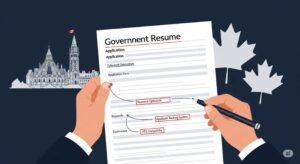
This is perhaps the biggest pitfall for job seekers. A private-sector resume, no matter how impressive, rarely translates directly into success in the government hiring landscape. Government HR departments use highly specific screening criteria.
The resume you used to land your last private sector gig just won’t cut it. Here’s why:
- Government-Specific Resumes are Different: Unlike the private sector which often favors brevity and broad skill sets, government applications demand a highly detailed, evidence-based approach. You need to explicitly demonstrate how you meet each and every essential qualification listed in the job posting.
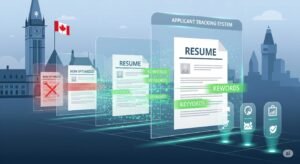
- Keyword Matching is Crucial: HR professionals and Applicant Tracking Systems (ATS) actively scan for keywords directly from the job description. If your resume tailoring doesn’t incorporate these terms, your application might be filtered out before a human even sees it.
- The “STAR” Method is Your Friend: For government-specific resumes and screening questions, using the STAR method (Situation, Task, Action, Result) is paramount. It allows you to provide concrete examples of your experience and achievements, proving your capabilities rather than just stating them. For instance, instead of saying “Managed projects,” you’d say, “In my role as Project Coordinator at Company X (Situation), I was tasked with overseeing the implementation of a new software system (Task). I developed a project plan, coordinated a team of five, and managed vendor relationships (Action), resulting in the project being completed 15% under budget and two weeks ahead of schedule (Result).”
Misconception 3: “Interviews are Just a Chat” (The Structured Interview Trap)
Government interviews are not casual conversations. They are highly structured, competency-based, and designed to assess specific skills and experiences relevant to the role. Many candidates walk into these interviews unprepared for the rigour.
- Behavioral Questions Reign Supreme: Expect questions like “Tell me about a time when you had to deal with a difficult client” or “Describe a situation where you demonstrated strong leadership skills.” These are designed to elicit examples of past behavior, which is considered the best predictor of future performance.
- Consistency is Key: Interviewers will often use a standardized scoring rubric. Your answers need to be consistent, detailed, and directly address the competencies being assessed.
- Panel Interviews are Common: You’ll often face a panel of interviewers, not just one. This means your answers need to be clear and comprehensive, satisfying multiple perspectives.
- Assessments and Tests: Many Ontario government jobs require additional assessments, such as written exams, case studies, or aptitude tests. These are designed to evaluate skills that are critical for the role and can be a significant hurdle if you’re not prepared.
The Bureaucracy Barrier: Understanding the System
The perceived bureaucracy and complexity of the government application process itself is a major reason many people get discouraged. It can feel like an endless maze of forms, portals, and specific instructions.
- Navigating Online Portals: Each level of government (federal, provincial, municipal) and even some agencies (like the TTC or Toronto Hydro) have their own unique online application portals. These often require creating detailed HR profiles, which can be time-consuming and require specific information to be entered in particular fields.
- Long Application Forms: Beyond the resume, many government applications involve extensive online forms or questionnaires that delve deeply into your qualifications, often asking for more detail than a traditional resume.
- Patience is a Virtue: The hiring process in government tends to be longer than in the private sector due to the rigorous screening and approval stages. It’s not uncommon for a process to take several weeks or even months. Persistence is key!
Action Steps: Your Path to a Government Career
Don’t let these challenges deter you. Thousands of people successfully land Ontario government jobs every year, and you can be one of them. The key is to understand the system and approach it strategically.
Here are your action steps:
- Research Thoroughly: Understand the specific requirements, preferred formats, and common practices of the government body you’re applying to (municipal, provincial, federal, or specific agencies like TTC or LCBO).
- Tailor Every Resume & Application: Never use a generic resume. Customize your resume for each and every job posting, explicitly addressing all essential qualifications and using keywords from the job description.
- Master the STAR Method: Practice crafting compelling answers using the Situation, Task, Action, Result method for both written applications and interviews.
- Prepare for Interviews and Assessments: Anticipate behavioral questions and research common government-specific interview styles. If assessments are mentioned, seek out practice materials.
- Be Persistent and Patient: The process takes time. Don’t get discouraged by initial rejections; learn from them and refine your approach.
Quick FAQ
Q: Are government jobs only for older, experienced professionals? A: Absolutely not! While experience is valued, there’s a strong push for diversity and new talent, especially in entry-level government jobs. Many organizations actively recruit newcomers and those starting their careers.
Q: Do I need a specific degree to get an Ontario government job? A: While certain roles require specific degrees (e.g., engineering, law, healthcare), many entry-level government jobs across administration, clerical, customer service, and IT are accessible with college diplomas or a combination of education and relevant office experience.
Q: Is it true that government jobs have very little room for career growth? A: This is another common misconception. Government organizations often encourage internal mobility and provide extensive training and development opportunities. Starting with an entry-level government job can be a strategic “foot in the door” to build a long and fulfilling government career.
Summary
While the idea of securing an Ontario government job can seem daunting due to complex application processes, strict resume requirements, and structured interviews, the reality is that hundreds of opportunities arise daily. Most people fail not from a lack of potential, but from approaching government hiring with a private-sector mindset. By understanding the unique requirements of government-specific resume tailoring, preparing for government-specific interview preparations, and embracing the structured nature of the process, you can overcome these hurdles. The benefits—better pay, superior benefits, increased security, and robust career growth in Federal or Provincial Governmrnt, Toronto, the GTA, and Ottawa—make the effort truly worthwhile.
TL;DR
Getting an Ontario government job isn’t easy, but it’s not impossible. Most struggle due to ignoring specific resume tailoring needs and interview preparation for the unique government hiring process. Learn the system, and your secure, rewarding government career awaits.
Ready to unlock your potential for a rewarding public service career? Stop wasting time on generic resume writers and learn the specific strategies that work. For a little money, you will learn and practice all that is needed to get an Ontario government job and how to build a career internally. Visit govcareer.ca for more info.